Ventilation is one of the most important systems in any commercial kitchen. It removes heat, smoke, steam, grease and odour, keeps staff comfortable and plays a central role in fire safety. It’s also one of the most expensive systems to install and run, so choosing well matters.
When do you need an exhaust hood?
In Australia, cooking appliances that produce heat, grease or vapour generally require mechanical exhaust designed to AS 1668 and approved by your local council. Your mechanical engineer will confirm the exact requirements for your site and appliances.
Types of commercial kitchen ventilation
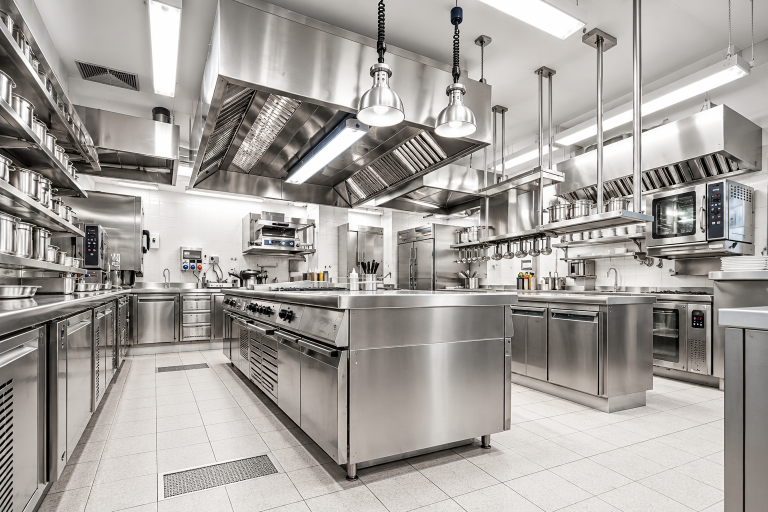
- Standard wall or island canopies for most cafe and restaurant cooking lines.
- Induction canopies that introduce make-up air at the hood to improve capture and comfort.
- Water mist hoods that add a further layer of fire protection.
- Self-cleaning and UV systems that reduce grease build-up and odour.
- Ventilated ceilings for large production kitchens such as hospitals.
Why filter efficiency affects running costs
Better grease separation means the system needs less air to do the same job. The Vianen range manufactured by Frost uses the patented Fecon filter, which can cut exhaust air requirements by up to 35%. That can allow smaller fans and ductwork and lower energy bills.
Plan ventilation with the kitchen layout
Canopy size and position depend on the equipment underneath, so ventilation should be designed alongside the kitchen layout, not after it. Frost works with mechanical engineers and builders to coordinate canopies, ductwork and make-up air.
Learn more about our kitchen ventilation systems or request a quote.